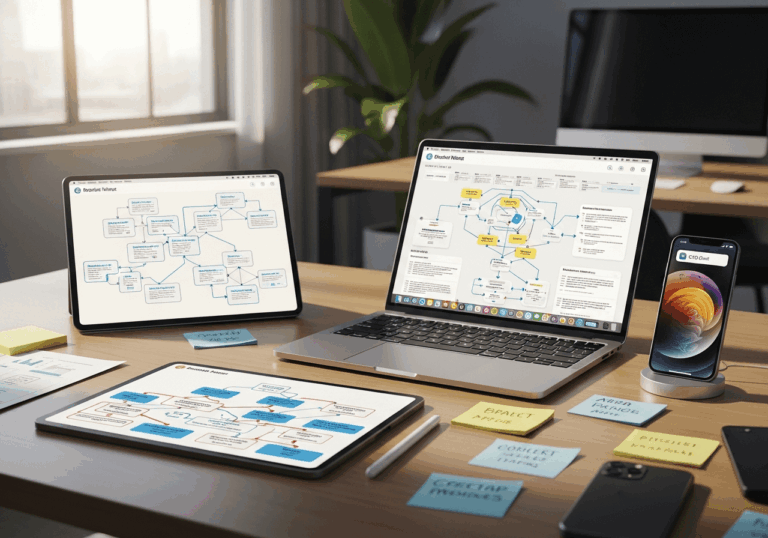
In today’s rapidly evolving digital landscape, businesses and entrepreneurs face many challenges when developing, maintaining, and deploying software solutions. From conceptualization to implementation, the journey is often fraught with complexities, especially when harnessing the power of emerging technologies like AI. Software integration is a critical aspect of this process, and it is pivotal in creating cohesive, efficient, and scalable systems.
The Integration Conundrum
Many businesses find themselves grappling with disparate systems that don’t communicate effectively. This lack of integration can lead to:
- Data silos
- Inefficient workflows
- Increased manual work
- Higher costs
- Reduced productivity
- Poor customer experience
The need for seamless software integrations has never been more pressing. As companies strive to stay competitive, they must find ways to connect various applications, databases, and platforms to create a unified ecosystem.
Challenges in Software Integration
- Legacy Systems: Many organizations still rely on outdated systems that are difficult to integrate with modern solutions.
- Data Compatibility: Different systems often use varied data formats, making it challenging to synchronize information across platforms.
- Security Concerns: Integrating multiple systems can create potential vulnerabilities if not done correctly.
- Scalability Issues: As businesses grow, their integration needs evolve, requiring flexible and scalable solutions.
- Maintenance Complexity: Integrated systems require ongoing maintenance and updates, which can be resource-intensive.
Solutions for Effective Software Integration
To address these challenges, businesses can explore various integration strategies:
- API-led Connectivity APIs (Application Programming Interfaces) are the building blocks for modern software integrations. They allow different applications to communicate and share data seamlessly.
- iPaaS (Integration Platform as a Service) Cloud-based iPaaS solutions provide a centralized platform for managing integrations across multiple systems and applications.
- Middleware Solutions Middleware acts as a bridge between different software applications, facilitating communication and data exchange.
- Custom Integration Development For unique business needs, custom-built integrations can provide tailored solutions that off-the-shelf products may not offer.
- Microservices Architecture Breaking down applications into smaller, independent services can make integrations more manageable and scalable.
Leveraging AI in Software Integrations
Artificial Intelligence is revolutionizing the way software integrations are approached. Here are some ways AI is enhancing integration processes:
- Automated Data Mapping: AI algorithms can automatically map data fields between different systems, reducing manual effort.
- Predictive Maintenance: AI can predict potential integration issues before they occur, allowing for proactive maintenance.
- Intelligent Error Handling: AI-powered systems can identify and resolve integration errors more efficiently than traditional methods.
- Natural Language Processing: NLP can facilitate integrations between systems that use different terminologies or data structures.
Use Cases: Software Integration Success Stories
- E-commerce Platform Integration An online retailer integrates its e-commerce platform with its inventory management system, CRM, and shipping software. This integration resulted in:
- Real-time inventory updates
- Automated order processing
- Improved customer service
- 30% reduction in manual data entry errors
- Healthcare Data Integration A hospital network integrated patient data across multiple departments and external healthcare providers. The results included:
- Improved patient care coordination
- Reduced duplicate tests and procedures
- Enhanced data security and compliance
- 25% decrease in patient wait times
- Manufacturing Process Integration A manufacturing company integrated its production systems with supply chain management and quality control software. Benefits included:
- Optimized production schedules
- Reduced waste and inventory costs
- Improved product quality
- 15% increase in overall efficiency
Embracing Comprehensive Software Integration Solutions
As businesses navigate the complex world of software integrations, it’s crucial to partner with experts who understand the intricacies of modern development and maintenance processes. From ideation to deployment and legacy system upgrades to cutting-edge AI implementations, the right partner can make all the difference.
Businesses seeking robust, scalable, and innovative software integration solutions should consider outsourcing software development. KAL Solutions offers comprehensive software development outsourcing services to help you tackle your integration challenges head-on. With a team of experienced professionals who are well-versed in the latest integration technologies and methodologies, KAL Solutions can guide you through every step of your software integration journey.
Software Integrations solutions
Don’t let software integration challenges hold your business back. Embrace the power of seamless software integrations and unlock your organization’s full potential. Contact KAL Solutions today to learn how their software development outsourcing expertise can transform your integration strategy and drive your business forward in the digital age.