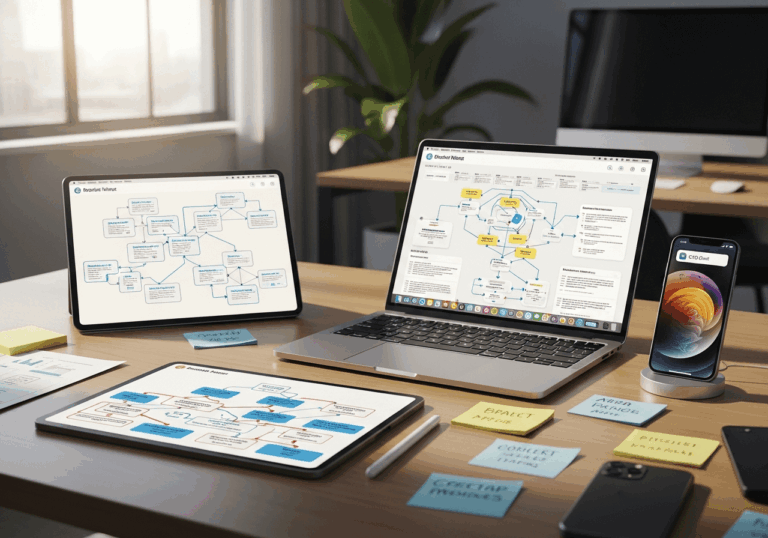
Artificial Intelligence (AI) has emerged as a game-changing force across industries in today’s rapidly evolving technological landscape. AI integrations transform businesses’ operations, decisions, and interactions with customers. This in-depth article explores the world of AI integrations, their applications, benefits, challenges, and the future they’re shaping.
Understanding AI Integrations
AI integration involves incorporating artificial intelligence capabilities into existing systems, Mobile applications, or business processes. This involves leveraging machine learning algorithms, natural language processing (NLP), computer vision, and other AI technologies to enhance functionality, automate tasks, and derive intelligent insights from data.
Key Components of AI Integrations:
- Machine Learning Models: Algorithms that learn from data to make predictions or decisions
- Natural Language Processing (NLP): Techniques for understanding and generating human language
- Computer Vision: Technologies that enable machines to interpret and analyze visual information
- Predictive Analytics: Advanced analytics that forecast future trends and behaviors
- Robotic Process Automation (RPA): AI-powered automation of repetitive tasks
- Cognitive Computing: Systems that simulate human thought processes
Benefits of AI Integrations
- Enhanced Efficiency: Automating routine tasks and streamlining complex processes
- Improved Decision-Making: Providing data-driven insights for more informed decisions
- Personalized Experiences: Tailoring products, services, and interactions to individual preferences
- Predictive Capabilities: Anticipating future trends, behaviors, and potential issues
- Cost Reduction: Minimizing human error and optimizing resource allocation
- Scalability: Handling large volumes of data and tasks with ease
- Innovation Acceleration: Enabling the development of new products and services
AI Integration Strategies
- Identify High-Impact Areas: Assess where AI can provide the most significant benefits in your organization.
- Data Preparation: Ensure high-quality, relevant data is available for AI models
- Choose the Right AI Technologies: Select AI solutions aligning with your business needs.
- Integration Planning: Develop a comprehensive plan for integrating AI into existing systems
- Start Small and Scale: Begin with pilot projects and gradually expand successful implementations.
- Continuous Learning and Improvement: Regularly update and refine AI models based on new data and feedback
- Ethical Considerations: Implement AI responsibly, considering privacy, bias, and transparency
Real-World Applications of AI Integrations
| AI Application | Benefits |
|---|---|
| Customer Service Chatbots (Telecommunications) |
|
| Predictive Maintenance (Manufacturing) |
|
| Fraud Detection (Financial Services) |
|
| Personalized Product Recommendations (E-commerce) |
|
| AI-Enhanced Drug Discovery (Pharmaceutical) |
|
Challenges in AI Integration
- Data Quality and Availability: Ensuring access to large volumes of high-quality, relevant data
- Integration Complexity: Seamlessly incorporating AI into existing systems and workflows
- Skill Gap: Finding and retaining talent with AI expertise
- Ethical Concerns: Addressing issues of bias, privacy, and transparency in AI systems
- Regulatory Compliance: Navigating evolving regulations around AI use and data protection
- Change Management: Overcoming resistance to AI adoption within organizations
- ROI Justification: Demonstrating clear return on investment for AI initiatives
The Future of AI Integrations
As AI technologies continue to advance, we can expect to see:
- Explainable AI: Increased focus on making AI decision-making processes more transparent and interpretable
- Edge AI: Moving AI processing closer to the source of data for faster, more efficient operations
- AI-Human Collaboration: Enhanced systems that facilitate seamless interaction between AI and human workers
- Quantum AI: Leveraging quantum computing to increase AI processing power dramatically
- Emotional AI: Developing AI systems capable of recognizing and responding to human emotions
- Autonomous AI: Creating self-learning systems that can adapt and improve without human intervention
- AI in Emerging Technologies: Integration of AI with IoT, blockchain, and augmented reality
comprehensive list of AI integration tools and companies
Here’s a comprehensive list of AI integration tools and companies that are at the forefront of helping businesses incorporate artificial intelligence into their operations:
- TensorFlow (Google)
- Open-source machine learning platform
- Used for developing and deploying ML models
- A suite of enterprise-ready AI services, applications, and tools
- Offers natural language processing, computer vision, and machine learning capabilities
- Cloud-based AI services and tools
- Includes cognitive services, bot services, and machine learning capabilities
- A comprehensive suite of AI services and tools
- Offers machine learning, computer vision, natural language processing, and speech recognition
- AI-powered CRM platform
- Provides predictive analytics, natural language processing, and machine learning capabilities
- Open-source machine learning platform
- Offers AutoML capabilities for automated model selection and tuning
- Automated machine learning platform
- Enables rapid development and deployment of AI models
- Data science platform
- Provides visual workflow design for machine learning and predictive analytics
- Numerical computing environment and programming language
- Offers machine learning and deep learning toolboxes
- Open-source data analytics, reporting, and integration platform
- Provides visual programming for data science workflows
- Data science and analytics platform
- Offers automated machine learning and predictive modeling capabilities
- Enterprise AI software for building and deploying large-scale AI applications
- Provides industry-specific AI solutions
- Comprehensive set of tools for building, deploying, and managing ML models
- Includes AutoML capabilities for users with limited ML expertise
- PyTorch (Facebook)
- Open-source machine learning library
- Famous for deep learning and natural language processing tasks
- Unified analytics platform
- Offers a collaborative environment for data science and machine learning
- Collaborative data science platform
- Provides end-to-end ML model development and deployment capabilities
- AI, analytics, and data management platform
- Offers visual and programming interfaces for data science tasks
- Python and R distribution for data science
- Includes numerous packages and tools for AI and machine learning
- Cloud-based AI services and tools
- Offers machine learning, cognitive services, and data science capabilities
- AI-powered digital innovation system
- Provides machine learning, IoT, and blockchain capabilities
These tools and companies offer various AI integration capabilities, from basic machine learning libraries to comprehensive enterprise AI platforms. When considering AI integrations, KAL Solutions can help you navigate this landscape and choose the right tools and technologies for your business needs.
Embracing AI Integrations with Expert Support
For organizations looking to harness AI integrations’ transformative power, partnering with experienced professionals can be crucial. KAL Solutions offers comprehensive software development outsourcing services specializing in AI integrations. Their experts can guide you through every stage of the AI integration process, from strategy development to implementation and ongoing optimization.
Don’t let the complexity of AI integration keep your business from reaping its benefits. Explore how KAL Solutions’ software development outsourcing expertise can help you seamlessly integrate AI into your business processes, driving innovation, efficiency, and competitive advantage.
By embracing AI integrations, you can position your organization at the forefront of technological innovation, unlocking new possibilities for growth, customer satisfaction, and operational excellence. The future of business is intelligent, and AI integrations are the key to unlocking that potential—partner with KAL Solutions to begin your AI integration journey and transform your business for the digital age.